Unowned leads
An inquiry exists, but no responsible operator or response standard is visible.
CRM + Revenue Operations
Connect every inquiry to a source, stage, responsible operator and next action—so opportunities move with clarity instead of disappearing between tools.

The operational gap
An inquiry exists, but no responsible operator or response standard is visible.
Deals sit in broad stages without a defined next action, date or accountable person.
Activity is counted without a reliable view of source, movement and commercial status.
Pipeline architecture
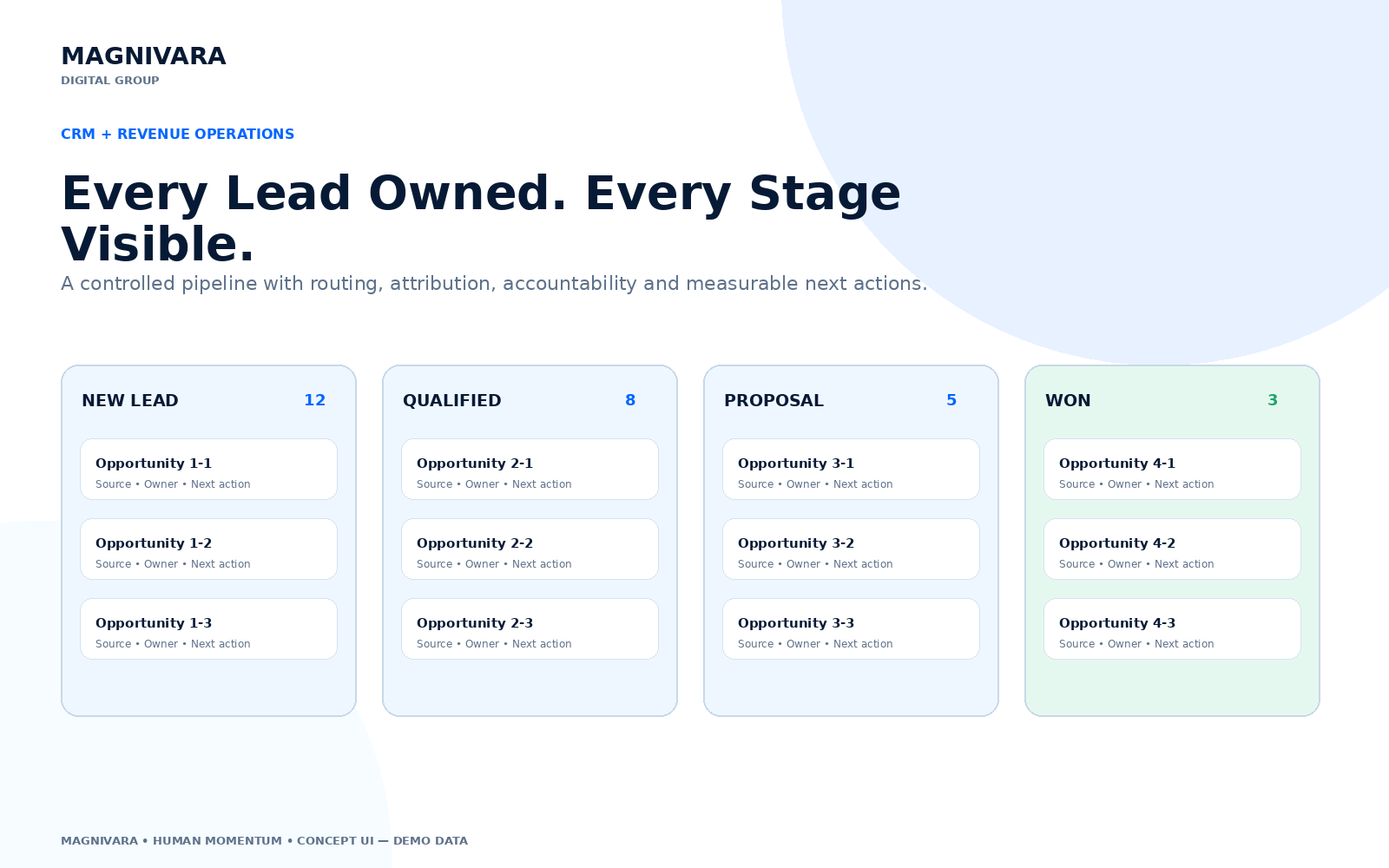
A disciplined CRM structure makes the commercial state visible: where the lead came from, who owns it, what happened last and what must happen next.
Revenue movement
System capabilities

Define who is responsible for each lead, opportunity and next action.

See source, stage and movement without relying on scattered updates.

Keep commercial activity connected to the opportunity state and operating priorities.
Source attribution
Consistent source fields create a usable record of how inquiries arrive. That context supports better routing, follow-up priorities and future investment decisions without presenting unverified performance claims.
Operational accountability
Define what must be true before an opportunity enters a stage.
Define the decision or completed action required before it advances.
Every active opportunity carries a specific action, owner and due point.
Operators review stalled records and exceptions on a consistent cadence.
Reporting that operators can use
A useful revenue view connects source, ownership, stage and next action. It helps leaders identify operating gaps without fabricating certainty or reducing the business to vanity metrics.
Fit
Your team can define the decisions that move an opportunity forward.
Operators can own leads and follow the agreed next-action standards.
Decision-makers want a usable view of pipeline movement and operational exceptions.
Build accountable movement
Start with the current lead journey, ownership rules, pipeline stages and reporting gaps.